Simple Answers, Complicated Sums
Good morning all,
If you’re anything like me, you’ll be hard-pressed keeping up with all the announcements from the new government. And on the tax side, well, the media really are enjoying themselves, aren’t they?
At the time of writing the current tale doing the rounds is a potential 1.8% social care levy on income above £6,240. This follows on from Boris Johnston trying something similar whilst he was in charge, to no long-term avail (scrapped by Liz Truss’ government – remember that!?) Tis’ a sticky problem.
A “death tax” is doing the round also. That’s a good one for a headline, isn’t it? Really gets the haunches up.
Of course, we already have a death tax, it’s just called inheritance tax (IHT). Sure, it only kicks in after certain allowances, it’s grossly complicated at times, but that’s what it is. Still, “How will the PM’s new Death Tax affect you?” is a much better headline that “Changes proposed to existing tax”, so that’s where we are.
I am actually very receptive to the idea of reforming IHT, but we can pick up on that in a little while. Your opinions on the above are always very welcome, so please do not hesitate to get involved. Mild abuse and terrible jokes also gratefully received.
And for the geeks amongst you, a treat awaits. Having successfully bored some of my peers to tears (now there’s a catchphrase) with a very niche concern re pensions coming into the taxable estate, I turn to you, a captive audience. I will explain a wee worry I have in a while.
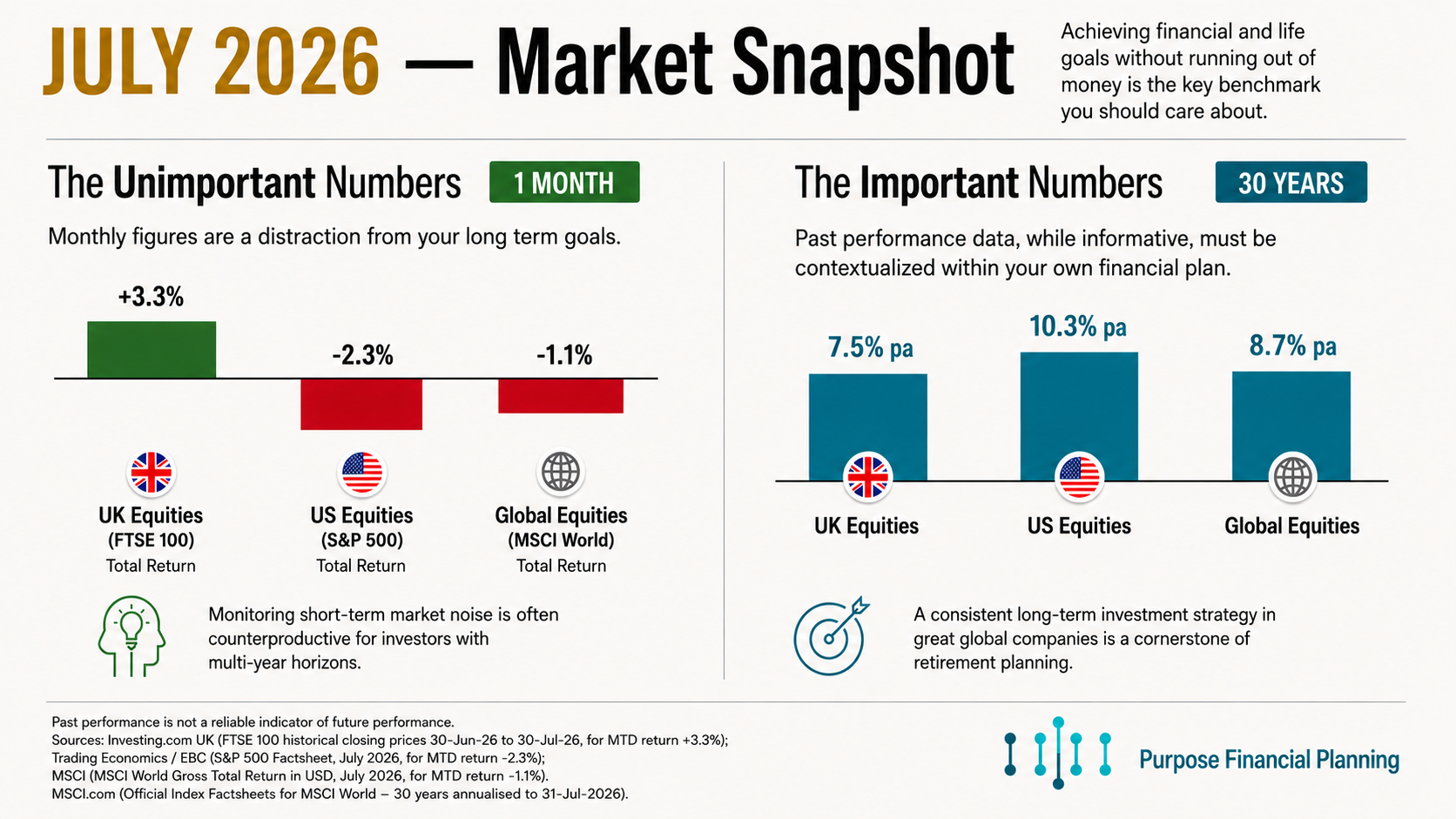
Otherwise, all is well on this end. We have had some glorious sunshine through July, markets are – at the time of writing, 30 July – behaving as we should expect, and life is grand. Enjoy it everyone, and appreciate the little things.
Let’s crack on.
Simple Answers, Complicated Sums
In May last year, I wrote about a podcast debate between the entrepreneur Daniel Priestley and the economist Gary Stevenson. I hadn't heard of either man 18 months ago, but now both are no strangers to the limelight.
I've been following both closely as I find the differing opinions fascinating, and, although I try to keep an open mind as much as possible, it’ll be no secret which philosophy I favour. I find the Stevenson angle defeatist, focusing far too much on the problems rather than on potential solutions. I much prefer the “get up and go” approach.
I mean, we should be celebrating the fact that, with £40, a name, and 24 hours, you can have a limited company registered in the UK and have a crack at being an entrepreneur.
Anyway, last month, Stevenson took his wealth tax argument to Channel 4, and partway through the programme he sat down opposite Dan Neidle. Being a geeky fan of Dan’s, I was keen to watch this, albeit the reviews were a little mixed.
If the name doesn't ring a bell (although to regular readers of this newsletter, it probably will), Neidle spent 23 years at Clifford Chance and finished as its UK head of tax before retiring to set up Tax Policy Associates, a non-profit that has since spent its time picking apart dodgy avoidance schemes and, on one memorable occasion, contributing to the departure of a sitting Chancellor. Importantly, he is not some free-market ideologue. He is Labour-affiliated and thinks we should tax wealth more. He just thinks this particular instrument is a dud.
His assessment of the proposal, delivered to its author's face, was not encouraging. It gets a little heated and they’re clearly butting heads, but it’s good television!
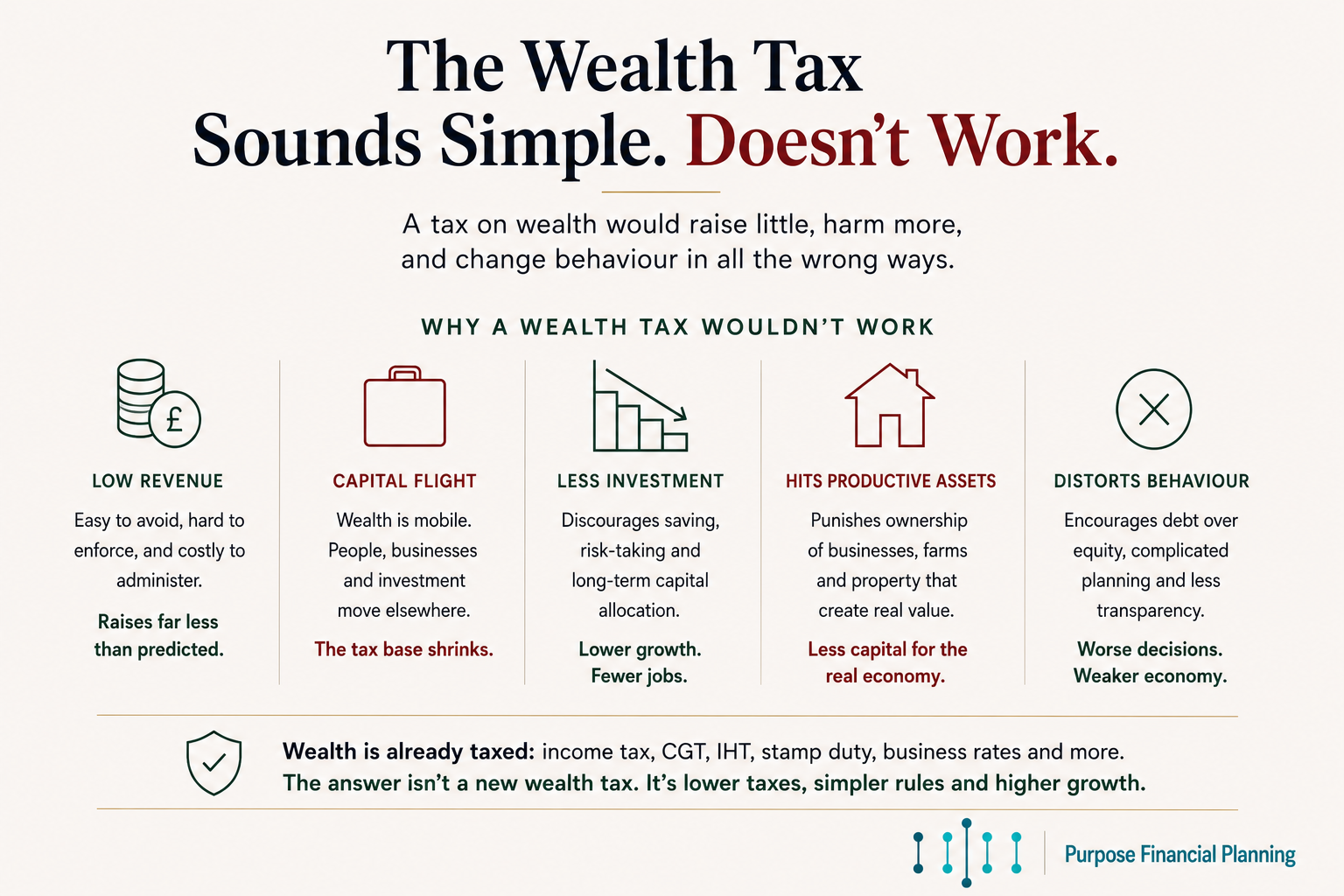
The headline proposal is 2% a year on individual wealth above £10m, said to raise £24bn. Putting aside the difficulty with implementation for a moment, Neidle's analysis finds that roughly 80% of that revenue would come from about 5,000 people, and around 15% of it, some £4bn, from ten individuals.
Ten. Not ten thousand. Ten.
No tax in history would lean so heavily on so few. Ten people adjusting their diaries to spend under 90 days a year here, and £4bn simply evaporates. And the £24bn figure assumes a behavioural response of 14%, which is the very bottom of the Wealth Tax Commission's own range. The top of that range is 34%, which gets you to £18.5bn. Even the optimistic scenario implies £200bn of capital leaving the country. The pessimistic one, £500bn.
History is not encouraging either. Europe had twelve wealth taxes in 1990. It now has three. Spain's raised €619m in 2023, because to limit the economic damage it exempts private companies, which rather defeats the purpose. Norway doubled its rate and watched a meaningful chunk of its wealthiest families relocate.
Plenty of thoughtful people disagree with all of this, and argue that if we can tax every payslip in the country to the penny we can manage a few thousand asset portfolios. And that’s grand, they could well be right on that point. Who knows.
But it doesn't answer the concentration problem, or safeguard against the behavioural implications.
On this note, and it’s only anecdotal, but two of my family members now live abroad, with a third considering it and likely to do so. Tax has featured heavily in each person’s decision.
What I find really interesting is the way each person tried to approach the issue. Stevenson goes for the soundbite: "don't you care about inequality?", whereas Neidle’s reply was to focus on whether the proposal could actually work, and whether it would ultimately raise or decrease revenue. If it doesn't work on its own terms, its aims are beside the point.
The practical takeaway is the same as ever. Reform of some description is coming (a new rumour a day is the new rule!), but the changes most likely to land are the unglamorous ones: capital gains tax, inheritance tax, and how we tax property and land.
Whilst I hope we never have to give a wealth tax any serious planning consideration; it was a cracking debate regardless.
A Potential Problem with Pensions
OK, to keep this newsletter from getting a little too tax-focused, let's jump back to the riveting world of pensions. Oh, OK, because you asked for it, let's combine pensions with inheritance tax and see how we do. I know, I know, I spoil you.
Strap yourselves in. It’s time to get niche!
(Nee-sh for our American friends. Not Nit-chi. Honestly.)
Fast forward to April 2027. The sun is shining, the new lambs are being born, and pensions are now part of the taxable estate when assessing for inheritance tax.
This can/will lead to a few concerns. One such is that, with the addition of pensions, we could push the cumulative estate over the value of £2m and thus lose the residential nil rate band (tapered basis, but the whole lot can go), currently £175k per person. This can make the marginal IHT rate levied on pension funds actually quite a bit higher than the headline 40%. Add in income tax for the recipients and it all gets very messy.
I have a very particular concern that I don't think many people have picked up on yet. That’s probably because they have better things to do with their lives.
Most pension schemes are written with the pension administrators (PSAs – or trustees for defined benefits/final salary) retaining discretion over whom they award the pension benefits to. This is why you'll all have completed an Expression of Wish (EoW) form as part of your retirement planning.
If that phrase means nothing to you, contact your pension provider or your financial adviser. It's important – you should keep your EOW up to date.
For a long time, PSAs retaining discretion made perfect sense. In fact, it was entirely necessary, because if there was a binding nomination of exactly whom the trustees should award the benefits to (in other words, the member made an unequivocal direction as to what should happen), then the pension funds lost their IHT-friendly status. Very painful situation all round. The cost of certainty, if you will.
However, as of April 2027, that discretion is of little use – in my opinion. Sure, there may be some benefit if a member has forgotten to update their expression of wish and it still shows a majority award to their recently divorced spouse. In that instance, yes, I can see the benefit of the trustees retaining some discretion and not blindly following the EOW.
However, herein lies the problem. When an individual dies, and if inheritance tax is due on that estate, it has to be paid within 6 months of the end of the month of the date of death. Otherwise, HMRC start adding a very healthy interest rate of 7.75%.
Estates are already pretty complex, especially if property is involved. Families, as we know, have their histories, and some feelings kept buried for years can make themselves known during this difficult time.
We will soon experience additional complexity because the final IHT situation cannot be known until the trustees or PSAs have made their decision as to whom the pension death benefit(s) will be awarded to. In other words, until they have exercised their retained “discretion” over what happens to the pension. In most cases it will/should be straightforward. In many it will not.
Given that the retained discretion will shortly no longer serve any purpose from an IHT-planning angle, and given that some pension scheme administrators (PSA) have, shall we say, “less than efficient systems”, I can see a potential problem here (mainly via the secondary point there).
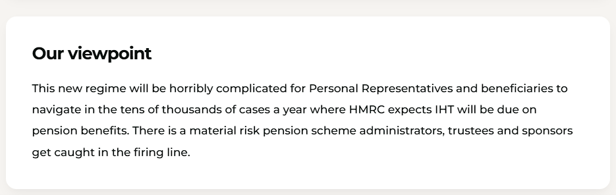
In simple terms, if we are charged hefty interest for a late payment of IHT, and we don’t really know the IHT situation until the PSAs have made their decision, and there will be a lot of PSA decisions to be made continually in a high-pressure environment, then, y’ know, we have a problem.
Perhaps better, in my view – and assuming it is regularly updated to reflect wishes and personal circumstances - to allow binding nominations to become more common in relation to pension benefits.
I have actually raised this point with some of the providers we deal with. Talks are ongoing.
The only practical answer to the above, as the situation currently stands, is for the personal representatives of the estate to pay a “best estimate” of any IHT due in advance of the six-month deadline. Thereafter, any over/underpayment can be corrected once the true figures land. However, it doesn't negate the interest charged on any potential underpayment – that still sits at 7.75%.
I did promise you raw geekery. Fun, isn’t it?
In closing, the pension consultancy firm LCP sum it up well:
Please note that the changes apply to most unused pension funds and death benefits from April 2027. For advice or guidance on your specific situation, please speak to a suitably qualified individual. Income tax may apply on any beneficiary drawdown, relevant to the individual circumstances.
A Big Number, and a Really Big Number
Stop and digest the below for a second:
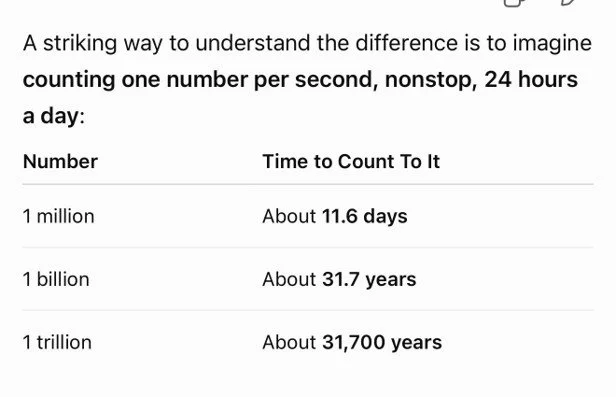
I had to read it a few times before I really understood it.
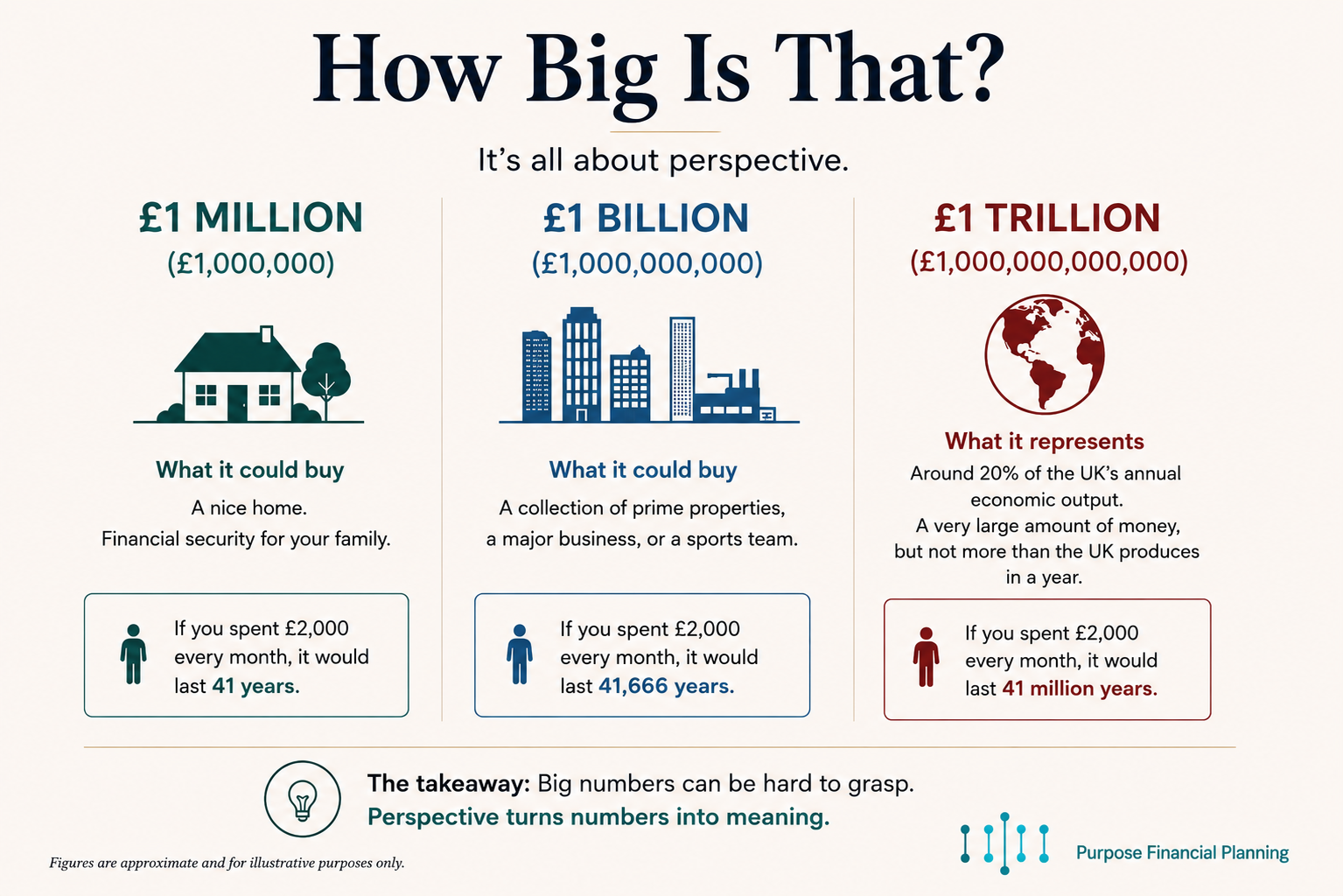
Now, take the above and consider it on a monetary level. We're all pretty comfortable with £1 million as a concept. We have homes worth hundreds of thousands and investable assets with similar values. The brain can appreciate how one gets to £1 million, or even several million, without too much difficulty.
One billion, however; I think we have a very limited concept of how big a number that actually is. I certainly do. And yet it's bandied about on a daily basis as if it's next to nothing. And a trillion?! Forget about it. Our brains evolved to hide from sabre-toothed tigers, not to comprehend these figures. We cannot grasp their scale.
"An extra £5 billion for X" lands on the ear like loose change, because the human mind simply refuses to feel the difference between a big number and an enormous one.
For context, and the key message here: the UK national debt is now around £2,989.9 billion; about 94.9% of GDP, and the highest debt burden since the early 1960s. That's not 2,911 of your billions sitting in a row. It's 2,911 separate 31.7-year counting marathons, stacked end to end. Roughly £42,000 to £43,000 for every man, woman and child in the country, ticking upward at about £4,186 every single second as you read this.
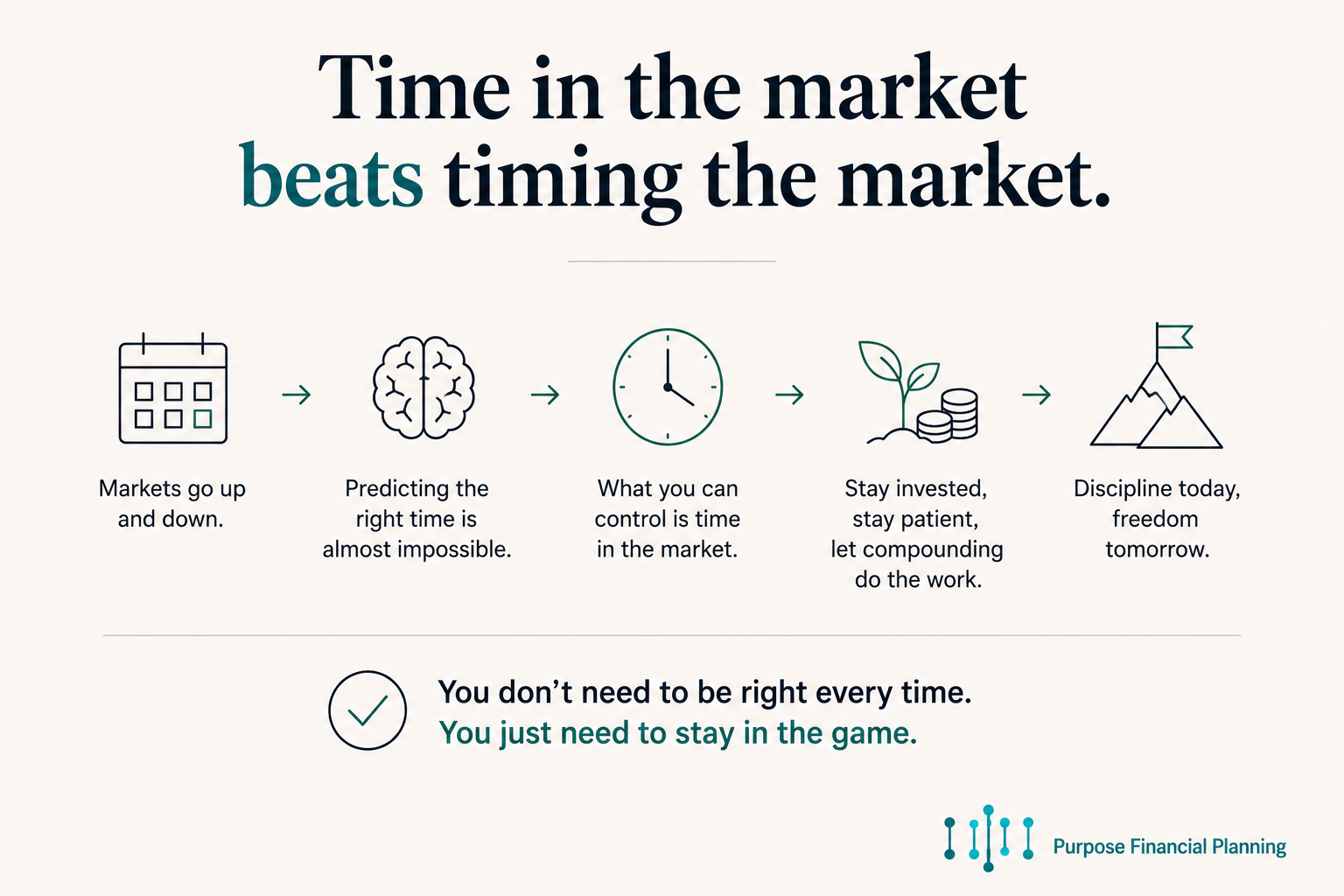
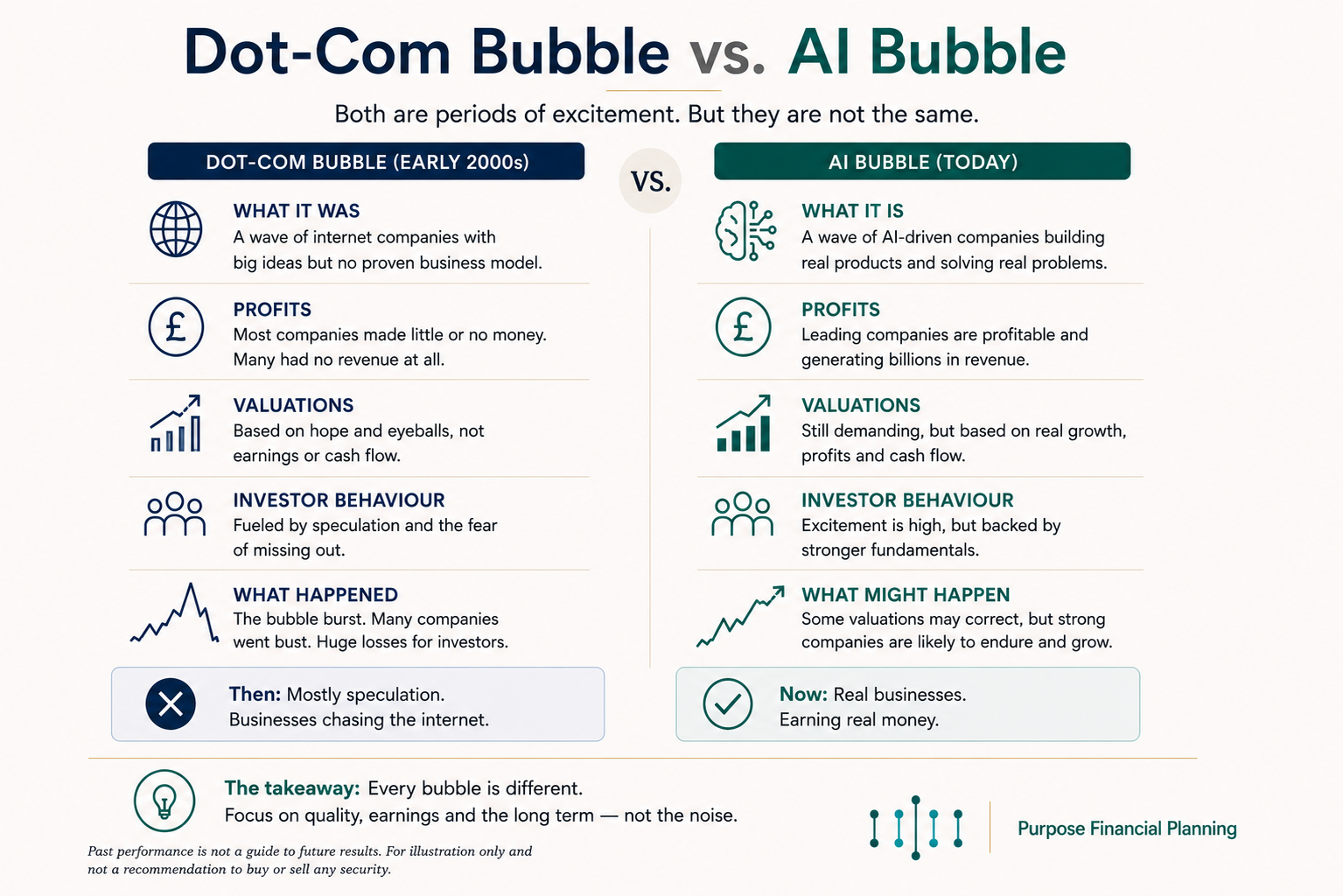
Wisdom in Picture Form
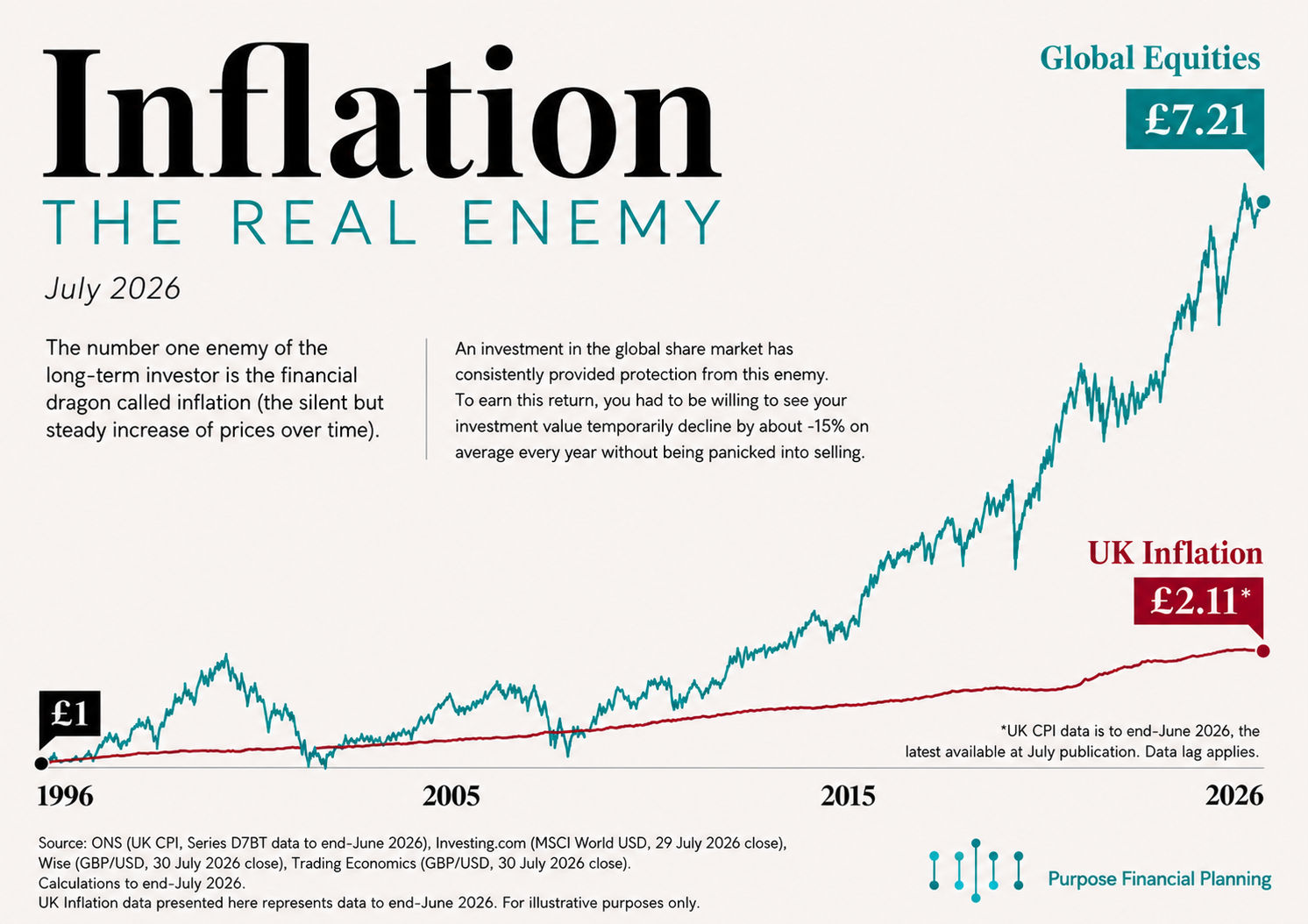
Because, as ever, these images tend to speak for themselves:

Optimism Prism
The media is not a friend of the disciplined and patient investor. Ignoring the key determinants of lifetime investor returns, the media focuses on short-term returns, market predictions, and negative news.
We present the following as an antidote to the onslaught of negative news:
Grassroots football clubs are booming as fans turn away from the Premier League ‘It’s brought a sense of community back to the town’ - Positive News - Positive News
Big fan of the above. On a related note: delighted to see the start that Bonnyrigg Rose have had. Seven goals scored, two games won, and no goals conceded. Yaldi.
Of course, because I must be punished for such optimism, they lost at home on Saturday, between writing and publishing this letter.
Controlled burns have saved thousands of giant sequoias
Restoring a last-resort antibiotic that superbugs had already beaten
Recommendations
1. A book, and not a financial one. Open, by Andre Agassi. Ghostwritten by J.R. Moehringer, who also did Phil Knight's Shoe Dog (brilliant book), so if you enjoyed that you'll be right at home here. The bit that stuck with me is that Agassi spends the whole book admitting he hated tennis. Hated it. Won eight majors anyway, because he turned up and did the work when he didn't feel like it. There's a lesson in there for those of us who look at other people's apparent effortlessness and assume they're enjoying it more than we are.
2. Second, and this is me speaking very anecdotally, lift something heavy. Three times a week is plenty. I'll not bore you to tears, but there's loads of science behind the benefits here, as well as the endorphin release, which I'm probably pretty much addicted to. In my view, it's the best form of mental health preservation, never mind the physical benefits. Give it a try.
3. Another non-financial book, a series I'm almost certain I will have recommended before, but you'll have to forgive me here. The Dennis Milne series by Simon Kernick is perhaps my favourite series of all time. It is very readable and feels like watching a movie, but better. Give it a whirl.
That’s us for this month!
All the best,
Andy
The compliance bit:
This newsletter is for information purposes and does not constitute financial advice, which should be based on your individual circumstances.
Past performance is used as a guide only; it is no guarantee of future performance.
Investing in shares should be regarded as a long-term investment and should fit in with your overall attitude to risk and financial circumstances.
The value of investments and any income from them can fall as well as rise. You may not get back the full amount invested.
The Financial Conduct Authority (FCA) does not regulate Trust Advice.
Trusts and will-writing services are not regulated by the Financial Conduct Authority.
Cover will cease on insurance products if premium payments are not maintained.
Generally, pure insurance plans have no cash in value at any time and will cease at the end of the term.
Purpose Financial Planning Ltd is registered in Scotland, company number SC738013. Registered address: 5 South Charlotte Street, Edinburgh EH2 4AN. FCA reference number 996218. Purpose Financial Planning Ltd is an appointed representative of ValidPath Limited, authorised and regulated by the Financial Conduct Authority, firm reference number 197107.
The information contained in this letter is based on our understanding of current legislation and HMRC practice as at the date of writing, both of which may change. This letter does not constitute legal or tax advice. Past performance is not a reliable indicator of future results. The value of investments may fall as well as rise and you may not get back the amount originally invested.